September 22, 2026·7 min read
How Much Does an ADA Website Lawsuit Actually Settle For in 2026?
Settlement figures online range from $5,000 to $100,000+. Here's the range that actually applies to a small business, and what really moves it.
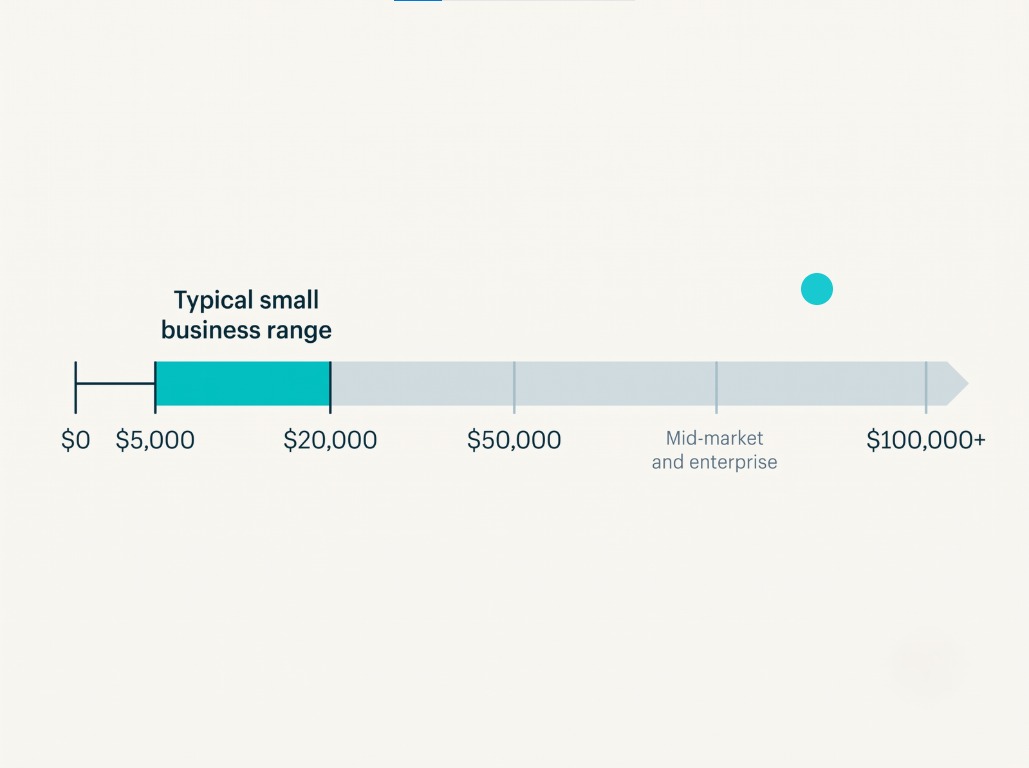
Most small business ADA website settlements land somewhere between $5,000 and $20,000, and the single biggest thing that moves that number is your business's revenue, not the specific violation someone found. Figures you'll find elsewhere vary wildly, sometimes by 10x, mostly because they're blending very different business sizes and very different cost categories into one number. Here's the range that actually applies to a small business, and what pushes it up or down.
#Key Takeaways
- For a small business, roughly $5,000 to $20,000 is the realistic settlement range, not the $30,000-plus averages you'll sometimes see quoted, those numbers are usually blending in mid-market and enterprise cases.
- Revenue is the biggest single driver. A business under $5 million typically settles toward the low end, a mid-market company faces a materially higher number, and enterprise or class-action cases run into six figures.
- A settlement and a demand letter's opening ask are two different numbers. The first figure in a letter is a starting position, not a bill.
- Repeat-defendant status matters. Nearly half of 2025's federal filings involved a business that had already been sued before, and courts and opposing counsel treat a second case differently than a first.
- Documented remediation effort is real leverage, not just goodwill. A dated record of genuine fixes in progress is exactly what tends to move a negotiation toward the lower end of the range.
- A demand letter and a filed lawsuit are not the same event. Most demand letters resolve or disappear well before anyone reaches a courtroom.
#Why the Numbers You'll Find Online Disagree With Each Other
Search this topic and you'll find real published figures ranging from around $5,000 up to $100,000 or more, sometimes on the same site. That's not because anyone's making numbers up, it's because "ADA lawsuit settlement" gets used to describe several genuinely different things.
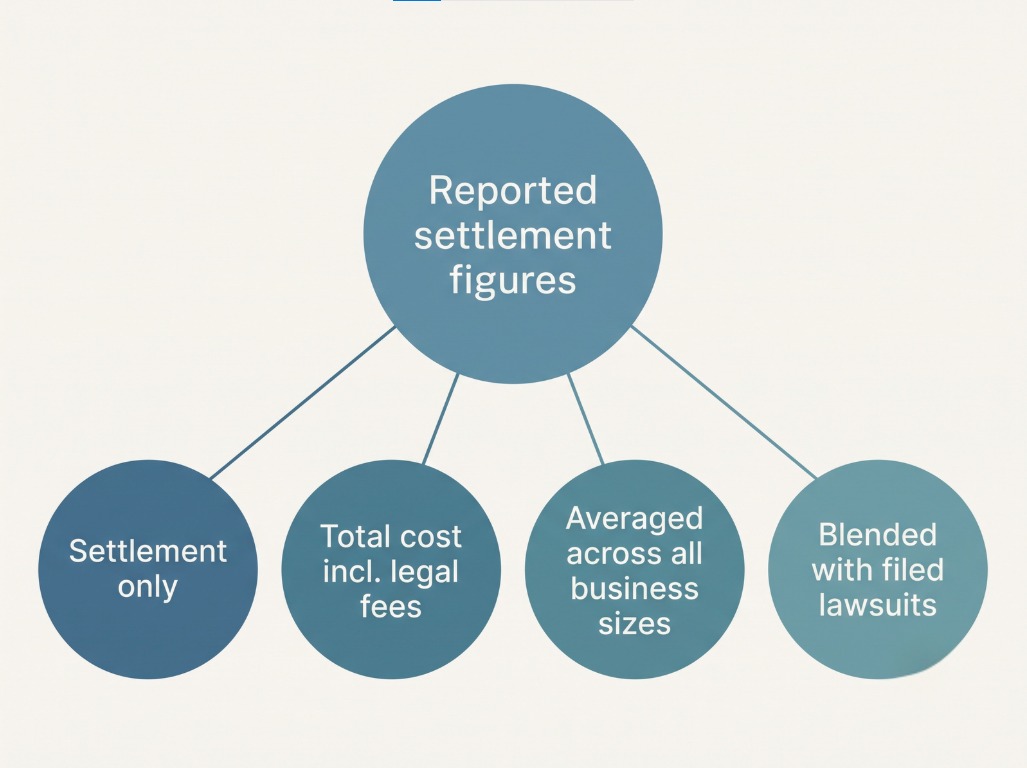
Some figures describe settlement payment alone. Others describe total cost, settlement plus legal defense plus remediation plus monitoring, which easily runs two to five times the settlement number by itself. Some are averaged across every business size that gets sued, from a single-location shop to a national retailer, which pulls the "average" well above what a small business actually experiences. And some blend demand-letter negotiations with actual filed, litigated cases, which behave differently.
The honest version: strip out enterprise and class-action cases, and the range for a small business, the kind with no in-house legal team and a website built on Shopify or WordPress, sits much closer to $5,000 to $20,000.
#What Actually Drives the Number Up or Down
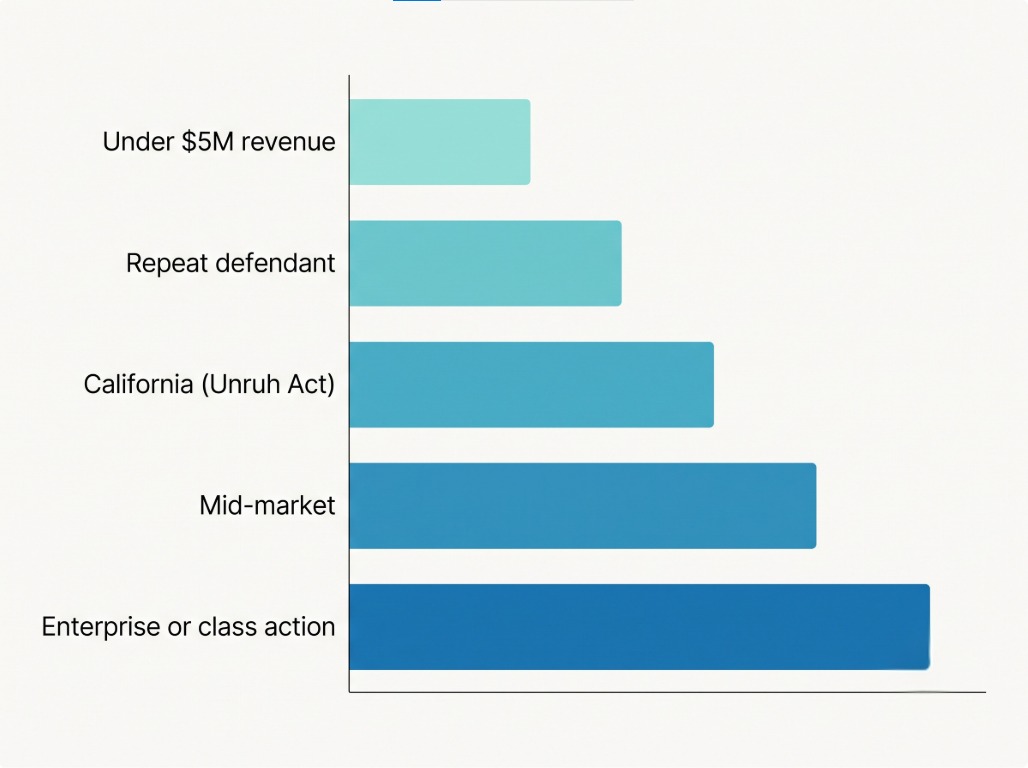
Revenue. This is the single biggest factor across every source that publishes a breakdown by business size. A business under roughly $5 million in revenue tends to settle at the low end of the range. Once a company crosses into mid-market territory, the number climbs meaningfully, and enterprise or class-action cases can reach well into six figures.
Repeat-defendant status. Nearly half of federal ADA Title III filings in 2025 involved a company that had already been sued before. A second demand letter or lawsuit against the same business is treated differently, prior notice undercuts any "we didn't know" argument and tends to push settlement expectations higher.
Jurisdiction. Federal ADA claims alone don't carry statutory damages, a plaintiff generally needs to show actual harm and can recover attorney's fees. State law can change that math substantially. California's Unruh Civil Rights Act, for example, treats an ADA violation as an automatic Unruh violation too, with a minimum statutory damage of $4,000 per violation under Civil Code Section 52(a), independent of the federal claim. New York, the single busiest jurisdiction for these filings, is also frequently cited as commanding a premium over other states.
Documented effort at the time of the demand. A business that can point to a real, dated record of remediation already in progress, actual code fixes, not a badge, is in a materially different negotiating position than one starting from zero. This is the practical value of what's sometimes called a Good Faith Timeline: it's leverage in a negotiation, not just a nice idea.
Demand letter versus filed lawsuit. These are genuinely different stages with different stakes. A demand letter's opening figure is a negotiating position, not a fixed bill, and plaintiffs' firms typically expect it to move. A filed, litigated case carries higher legal costs on both sides and generally settles for more once it's actually in court.
#The Demand-Letter-to-Lawsuit Ratio
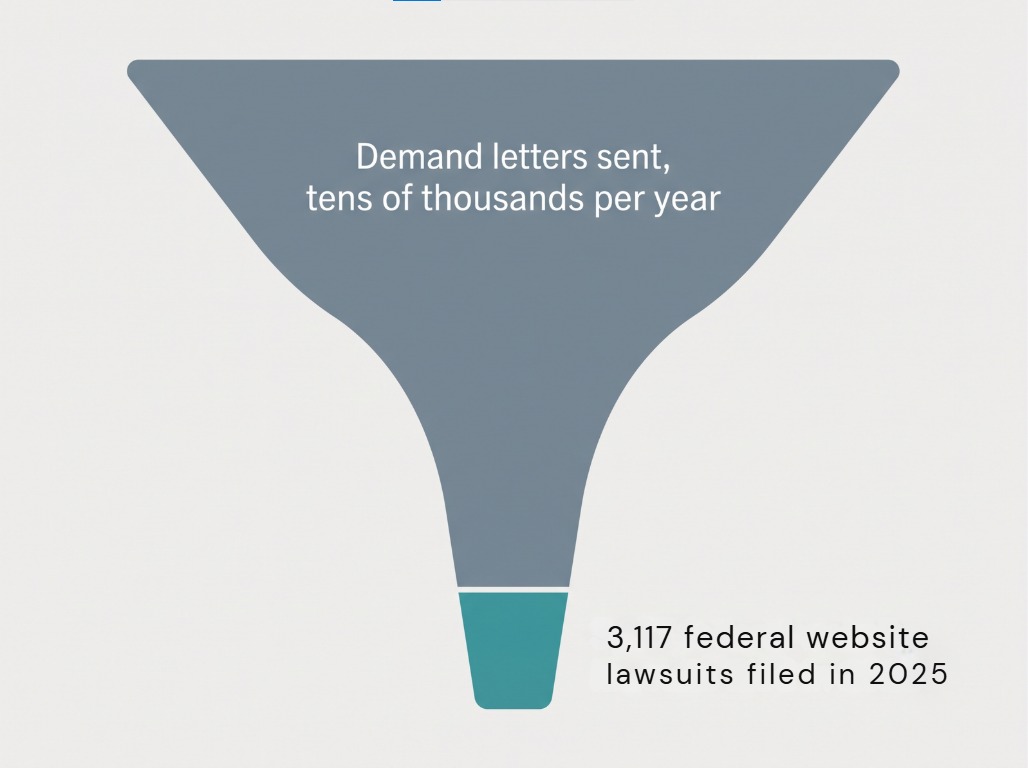
Most demand letters never become a filed lawsuit. Federal courts saw 3,117 website-accessibility lawsuits filed in 2025, up 27 percent from 2,452 in 2024, real, tracked, public numbers. Demand letter volume runs far higher than that. Researchers estimate the true total somewhere in the tens of thousands a year, meaning the large majority of demand letters are negotiated, resolved, or simply dropped long before anyone files anything in court.
That matters for reading settlement figures correctly. A number describing filed, litigated cases isn't automatically the number that applies to a demand letter that never proceeds that far, those tend to resolve for less, precisely because neither side wants to absorb the cost of actual litigation over a claim in that range.
#What This Means If You're Actually Facing One
None of this is a reason to ignore a letter or assume it'll just go away, most of it is real and worth taking seriously. It is a reason to be skeptical of a scary headline number that doesn't specify whose business it's actually describing.
The two things that most reliably keep a small business's outcome toward the lower end of this range: responding rather than ignoring it, and being able to show real, dated remediation effort already underway rather than starting the negotiation from nothing. Axeazy's free scan is a reasonable place to start building that record, in about 60 seconds, whether or not you've received a letter yet.
This article isn't legal advice, and no general guide can tell you what your specific letter is actually worth. An attorney who has read it is the only reliable source for that.
#FAQ
#Is $30,000 or more a realistic number for a small business?
Usually not. Figures in that range typically come from averages that include mid-market and enterprise cases, or from totals that combine settlement with legal defense and remediation costs rather than settlement alone. For a small business under roughly $5 million in revenue, $5,000 to $20,000 is a more realistic range for the settlement itself.
#Is the amount in a demand letter the amount I'll actually pay?
Rarely as-is. An opening demand is typically a negotiating position, and most demand letters get resolved for less than their initial ask, especially when the recipient responds promptly and can show genuine remediation effort rather than staying silent.
#Does having a lawyer change the settlement amount?
It can, in both directions. Legal counsel changes the negotiation itself, how the claim is evaluated, what leverage exists, and what a reasonable resolution looks like for your specific situation. This is exactly the kind of judgment call that needs an attorney, not a general guide.
#Why does California show up so often in these numbers?
The Unruh Civil Rights Act adds a state-law claim on top of any federal ADA claim, with a minimum statutory damage of $4,000 per violation, something federal ADA claims alone don't carry. That's a real, independent driver of higher settlement figures in California cases specifically, separate from federal exposure.
#Does settling mean my business is admitting it broke the law?
No. Most settlements explicitly include no admission of liability, that's standard, not unusual. A settlement is a resolution of a dispute, not a legal finding that a business did something wrong.
#Sources
Want this in your inbox?
The ADA Alert. Weekly intelligence.
Every Tuesday: accessibility news, common WCAG issues, and code-level fixes. Free. Unsubscribe in one click.
Scope of every report we ship: SCOPE LIMITATION: This report documents violations identified by automated WCAG 2.2 AA scanning using axe-core v4.11.0. Automated tools identify approximately 30 to 40% of all WCAG criteria. This report does not constitute legal advice, guarantee ADA compliance, or protect against legal action. ADA compliance is a legal determination made by courts. For full WCAG conformance assessment, engage an IAAP-certified accessibility professional.